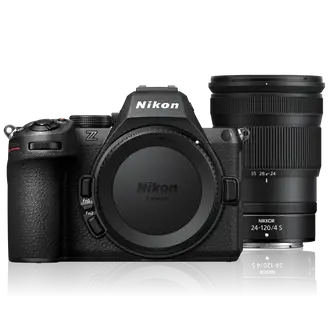
Nikon just gave its entry-level full-frame shooter a serious glow-up with the Z5 II, and honestly, it’s a bigger jump than most people expected from a camera wearing a “budget” badge.
The original Z5 was fine. It did the job but always felt like it was holding something back, especially when it came to autofocus and video. The Z5 II fixes that by borrowing guts from cameras way above its price tag.
Nikon dropped in the same 24.5-megapixel BSI sensor and EXPEED 7 processor found in the Z6 II and the Zf, and that single change ripples through everything else the camera does.
Auto focus is where you’ll notice it first. Nikon says it’s roughly three times faster than the old Z5, and it now recognises nine subject types, including birds, which used to be a feature reserved for Nikon’s pro bodies.
Focus tracking holds down to -10 EV, so dim restaurants and evening walks stop being a fight with hunting autofocus. Burst shooting also gets a real bump, hitting 30 fps in JPEG with pre-release capture, a feature that grabs frames just before you fully press the shutter so you don’t miss the moment your dog finally catches the frisbee.
Stabilization sits at 7.5 stops, just half a stop behind the pricier Zf and Z6 III, which is impressive for something in this tier.
Video shooters get 4K 60p (with a crop) or clean 4K 30p, plus internal N-RAW and N-Log recording, giving editors real room to grade footage without it falling apart.
The screen now fully articulates too, a small thing that vloggers and anyone who shoots at weird angles will actually use every day.
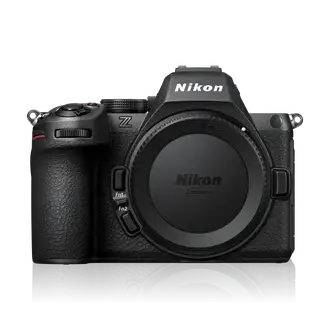
Physically, Nikon barely touched the body. It’s basically the same size as the original Z5, just a few millimeters thicker to fit that new screen. Dual UHS-II SD card slots return, and the whole thing still feels weather-sealed and solid in hand rather than plasticky.
So who should actually buy this thing?
If you’re a hobbyist stepping up from crop-sensor to full-frame for the first time, this is close to the smartest entry point Nikon has ever made. You get pro-level autofocus tricks without pro-level pricing. Wedding and event shooters who need a reliable second body will like it too, since it can sit alongside a Z6 III or Z8 without feeling like a downgrade in the moments that matter.
And hybrid creators who shoot both stills and video will appreciate that Nikon didn’t cheap out on the video side just because this sits at the lower end of the lineup.
Who should skip it?
If you’re shooting sports or wildlife professionally and need the fastest possible burst rates and buffer depth, the Z6 III or Z9 still make more sense. And if 24 megapixels feels thin for large prints or heavy cropping, the Z7 II offers 45 megapixels for a similar price bracket now that the Z5 II has pushed prices around a bit.
Worth mentioning: at $1,700 (Rs 1, 54,495.00) for the body, the Z5 II costs $300 more than its predecessor did at launch. That’s a fair trade for what you get, but it does put it closer to the Z6 II than to a true budget camera, so shop around before assuming this is the cheap option.
For anyone comparing brands, Canon’s R6 II and Sony’s a7 IV sit in roughly the same price and performance range, both worth a look if you’re not already invested in Nikon glass.
Photo Source : Nikon India