Canon EOS R8 Mark II: What’s New, and Who Should Actually Buy It
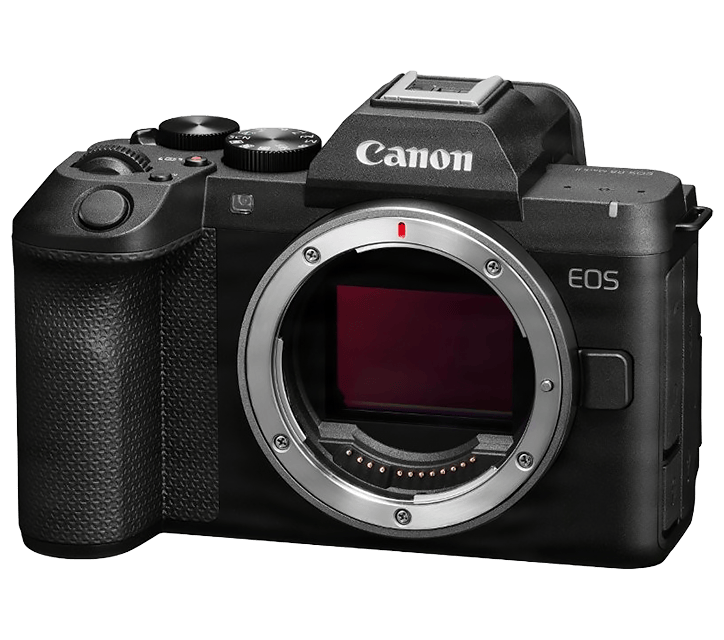
Canon has finally answered the loudest complaint about its budget full-frame camera. On September 15, 2026, Canon announced the EOS R8 Mark II, a full-frame mirrorless camera aimed at advanced photographers, hobbyists, creators, and newcomers to full-frame imaging. The camera is a full-frame mirrorless update to the 2023 EOS R8, expected to ship in late October 2026 for around $1,899 body only ( MRP Rs. 1,78,995.00) or $2,099 as a kit with the RF24-50mm F4.5-6.3 IS STM lens.
The headline is in-body stabilisation, something photographers have been asking for since the original R8 launched.
What’s Actually New
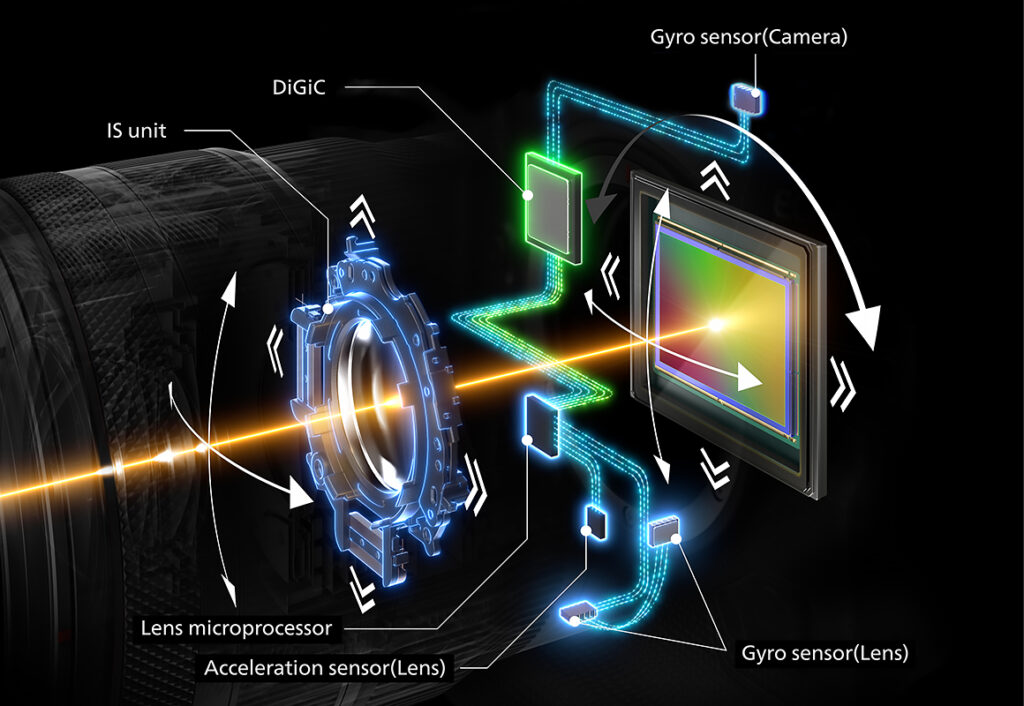
The R8 Mark II keeps the same 24.2MP full-frame CMOS sensor and DIGIC X processor that powered the 2023 EOS R8, but the biggest change is the addition of in-body stabilisation, delivering up to 7.5 stops of correction in the center of the frame and 7 stops at the edges. That single change addresses the most persistent criticism of the original.
It doesn’t come free, though. The added IBIS mechanism pushes body weight up to 499g, or 546g with card and battery, still the lightest full-frame EOS to ever include the feature, but heavier than before.
Canon also abandoned the smooth, curved design of the original in favour of angular lines that stand apart from the rest of the EOS R lineup, a styling choice that reviewers describe as closer to a retro Sony look than the retro-Canon aesthetic that had been rumoured.
Autofocus also moved forward. The system is now based on Dual Pixel CMOS AF II with deep learning subject detection, and Canon added a dedicated AF joystick on the back , a control the original R8 famously lacked.
There’s also a new intelligence layer for people-tracking: Register People Priority lets users register up to 10 faces in-camera and up to 100 on a memory card, so the R8 Mark II can automatically prioritise specific people in busy scenes,
It’s useful for parents, event shooters, and anyone photographing the same subjects repeatedly.
One thing didn’t change: the R8 Mark II still has just one memory card slot, supporting SD/SDHC/SDXC UHS-I and UHS-II cards, a compromise that will matter to some buyers and not others, depending on how much redundancy they need.
Original R8 vs. R8 Mark II: The Real Differences :
| EOS R8 (2023) | EOS R8 Mark II (2026) | |
| Sensor | 24.2MP full-frame CMOS | Same 24.2MP sensor |
| Processor | DIGIC X | Same DIGIC X |
| IBIS | None — stabilization only via lens and digital Movie IS | Up to 7.5 stops in-body |
| Autofocus | Dual Pixel CMOS AF II, 1,053 zones, people/animal/vehicle detection | Dual Pixel CMOS AF II + deep-learning detection, new AF joystick |
| Weight | 461g with battery and card | 499g body / 546g with card and battery |
| Card slots | Single UHS-II SD slot | Single UHS-I/UHS-II SD slot (unchanged) |
| Design | Rounded, minimalist | Angular, more pronounced EVF hump |
Beyond IBIS and the joystick, the core imaging pipeline, sensor, processor, and base burst/video specs, carries over largely unchanged from the original, which itself borrowed heavily from the pricier EOS R6 Mark II. The original R8 could already shoot 6fps mechanical, 40fps electronic, and record 4K oversampled from 6K up to 60p. Expect those numbers to remain roughly the same on the Mark II, with the real-world benefit coming from steadier handheld shooting and better tracking, not a resolution or speed leap.
It’s also worth noting the competitive backdrop that likely forced Canon’s hand. Rivals like the Nikon Z5 II already offer in-body stabilisation, dual card slots, and a strong viewfinder at a similar price point, while Sony’s A7C II brings more megapixels and a dedicated AI processing unit. The Mark II closes some of that gap, but not all of it — the single card slot in particular remains a sore point for anyone who wants on camera backup, a common requirement for wedding or event work.
Who Is This Camera Actually For?
Professional photographers: Mixed. The IBIS addition and joystick make the R8 Mark II noticeably more usable for handheld stills work , landscape, travel, and street shooters will feel the difference immediately. But the single card slot remains a genuine limitation for paid, high-stakes work like weddings or events, where file redundancy isn’t optional. Most working pros will still treat this as a lightweight second body or backup camera to sit alongside something like the R6 Mark III or R5 Mark II, rather than a primary tool.
Beginners: This is squarely in the R8 Mark II’s wheelhouse, but with a caveat, it’s not an entry-level price.
At $1,899, it’s aimed more at someone stepping up from an APS-C body or an older DSLR who wants full-frame image quality without the bulk or cost of Canon’s higher-end bodies. Canon itself is positioning the camera for “advanced photographers, hobbyists, creators and newcomers to full-frame imaging” who want full-frame performance in a compact, travel-friendly package. The improved autofocus and people-tracking features make it genuinely forgiving for less experienced shooters.
Content creators and vloggers: This is arguably where the R8 Mark II makes the most sense. The original R8 already offered a 3.5mm mic input,
headphone output, and clean HDMI output, along with 4K oversampled from 6K — a video kit that already punched above its size. Add reliable in-body stabilisation for handheld run-and-gun shooting, plus the new deep-learning subject tracking for staying locked on a face while walking and talking, and the Mark II removes one of the last reasons creators leaned on a gimbal for simple talking-head or walk-and-talk content. The lightweight body (still under 550g) also keeps it genuinely portable for solo creators who are their own camera operator.
The Bottom Line
The Canon EOS R8 Mark II isn’t a reinvention — it’s Canon fixing the one thing everyone complained about the first time around. If you’re a content creator or hobbyist upgrading to full-frame, this is a meaningfully better camera than its predecessor, especially for handheld video and travel photography.
Working professionals will appreciate the improvements but will likely still find the single card slot a dealbreaker for mission-critical paid work, keeping this camera in second-body territory rather than a primary workhorse.